

Eight hours by plane from Moscow, wedged between Siberia and the Chinese border, sits the only place on earth besides Israel with the word “Jewish” in its official name. The Jewish Autonomous Oblast was established by Soviet decree in 1934 — a remote, sparsely populated stretch of the Russian Far East once designated as a homeland for Soviet Jewry. The experiment was never really about Judaism. It was about borders, politics, and control. Decades of Soviet suppression buried religious life across the region. But Jewish identity in Birobidzhan proved harder to stamp out than Moscow expected.
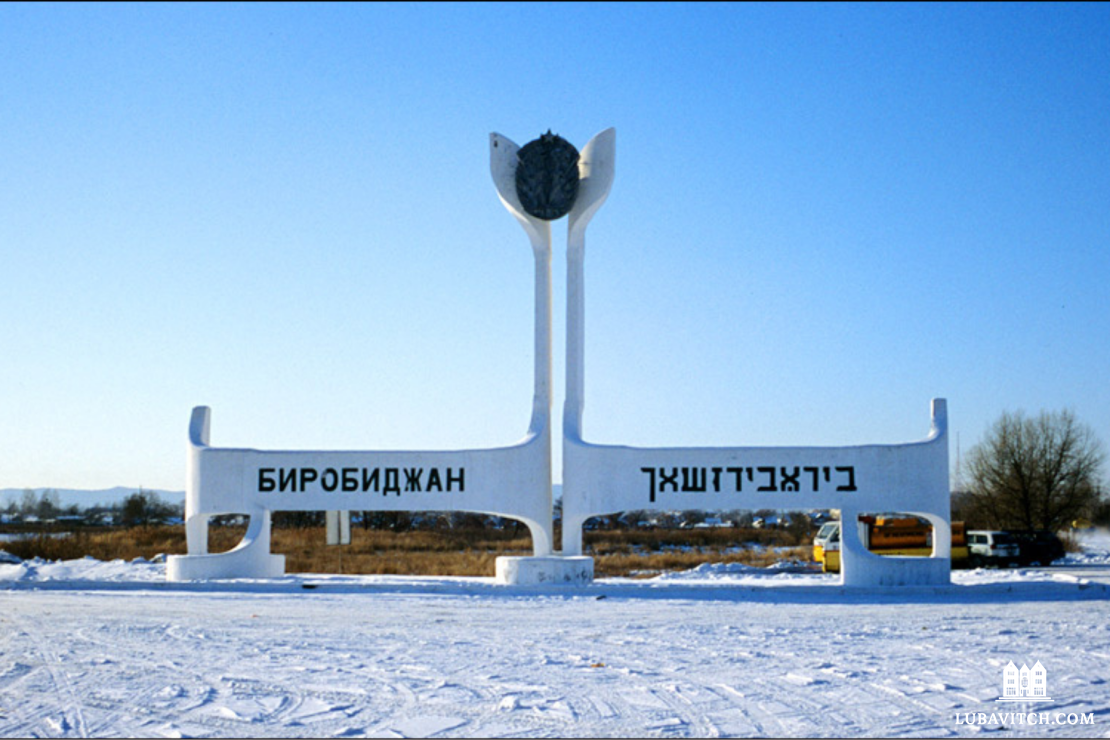
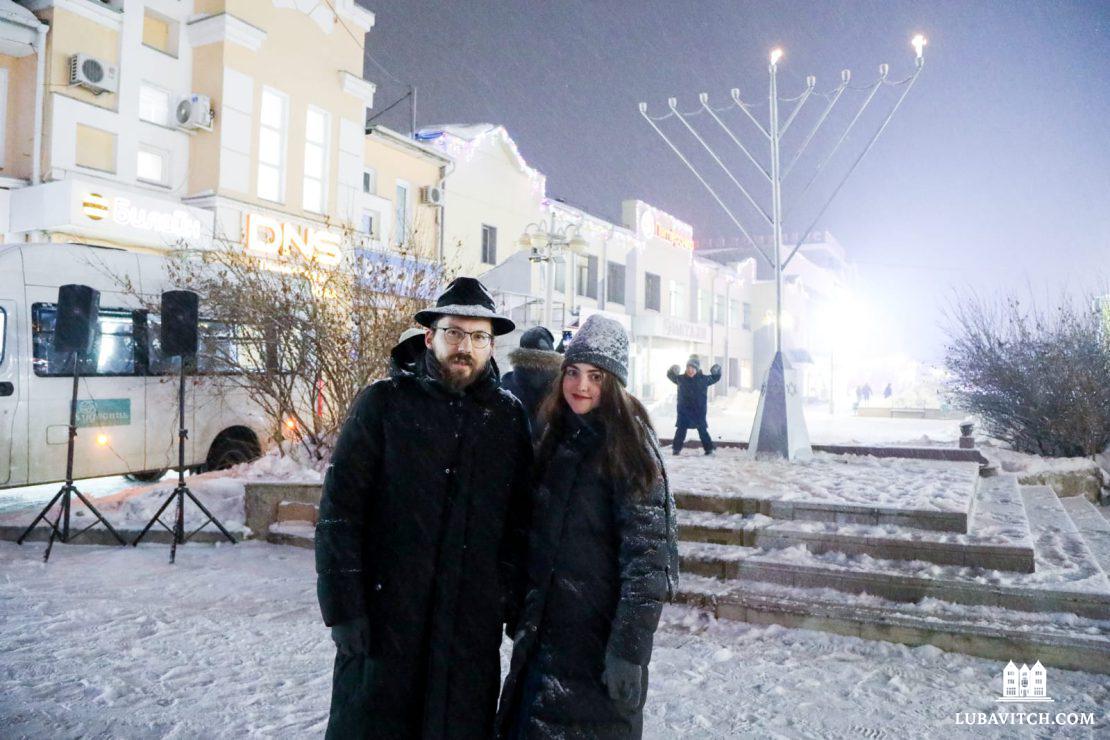
The traces are everywhere. The train station welcomes arrivals in both Russian and Yiddish. A menorah towers over the town square. And unlike nearly every other Soviet-built city, Birobidzhan’s main avenue isn’t named for Lenin — it’s named for the Yiddish writer Sholom Aleichem. It’s on that very street, at 14a Sholom Aleikhema, that the Chabad house stands today.
Rabbi Efraim Kolpak grew up in Kharkov, Ukraine. After marrying Ida — whose parents serve as Chabad emissaries in Khabarovsk, the largest city in Russia’s Far East — the couple settled in Moscow. It was there that Russia’s Chief Rabbi Berel Lazar raised the idea of Birobidzhan. They visited in 2020 for Purim, half-expecting to find no real Jewish pulse. When they arrived, their first experience was with a Jewish taxi driver — who wore a Star of David. Rabbi Kolpak hadn’t even set foot in the community yet. “We saw there was enormous work to do,” he said.
Six years in, the work has long taken root. Birobidzhan is a city of 65,000, and Rabbi Kolpak estimates up to 2,000 Jews — a very high ratio by Russian standards. His Shabbat services draw around 40 people. Every week, he says, he meets a Jew he didn’t know.
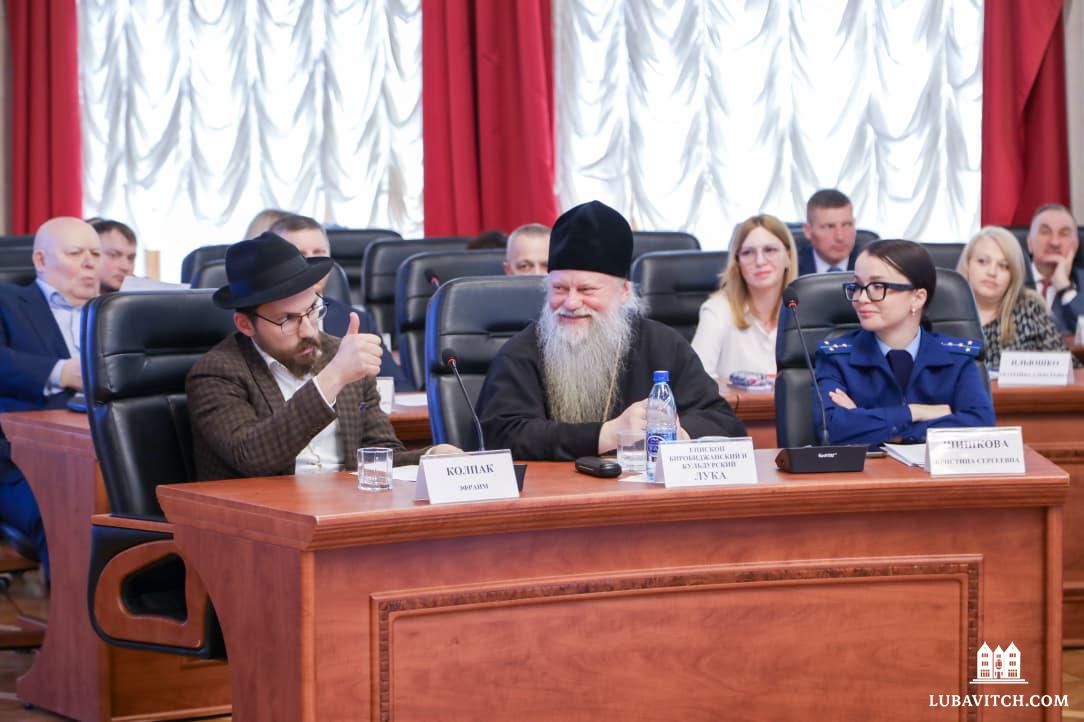
The Soviet legacy left its mark, but not how one might expect. Rabbi Kolpak says Jews here identify as Jewish more strongly than in many other parts of Russia. Some gather every Friday night for what they call Shabbat — playing billiards and cards. “They don’t come to synagogue,” he says, “but the fact that they have a Shabbat — that’s something.” Local government has come around too. Officials now consult Rabbi Kolpak before scheduling the annual Jewish cultural festival, making sure it doesn’t fall on Shabbat or the holidays.
A year ago, the community received its first Torah scroll of its own. The story began at a gathering of Russian Chabad representatives in Kaliningrad, where Rabbi Binyomin Wagner of Krasnoyarsk asked Rabbi Kolpak if his community had a scroll. He said they were using one on loan from Moscow. Six months later, Rabbi Wagner called — a benefactor had agreed to send one. The celebration shut down city streets. The regional governor attended personally.
When a Russian journalist recently asked community members why they stay in the region, Rabbi Kolpak started reaching for explanations about investment and purpose. Then the journalist turned to Frida Pelzmacher, a young Birobidzhan native who leads Jewish youth programming there. Her answer was simpler: “There’s a person called the Lubavitcher Rebbe, and he said no Jew should ever be alone.”
Rabbi Kolpak smiled. “I was sitting there searching for the right words,” he said, “and this person, who was born here, just had them.”
 Related Articles
Be the first to write a comment.