


On a recent morning, Rabbi Moshe Cunin lugged griddles and spatulas and copious ingredients to a teaching kitchen at the Lake Tahoe School. On the syllabus was breakfast for 50 residents of a teen shelter. The cooks? Middle school students at this Reno, Nevada institution. Their teacher had read an article about the Cunin’s challah stand, proceeds to fund their nascent Kitchen of Kindness, and he wanted in. Run by Cunin and his wife Doba, The Kitchen of Kindness hosts volunteers for regular culinary sessions to feed those in need.
Now the Kitchen was on wheels.
In the classroom, Cunin taught the students about tzedaka and giving back. Each kid was invited to share a kindness someone had done for them before they all cooked kosher pancakes, hashbrowns and fruit salad. After packaging up each meal, the students wrote cards for the shelter residents, teenagers only a little older than themselves. “Teachers told me that the cooking experience exposed their kids to the concept of charity in an impactful, tangible way,” shares Cunin. “For them, the giving was receiving.”
In the last year alone, over 100 similar kitchens have turned up the heat, simultaneously cooking up dinner and community, throughout the world.
The OG Kitchen is OBK, Our Big Kitchen, founded in 1997 in Sydney. “But truly,” avers co-director Rabbi Dovid Slavin, “that distinction belongs to our foreparents, Abraham and Sarah.”
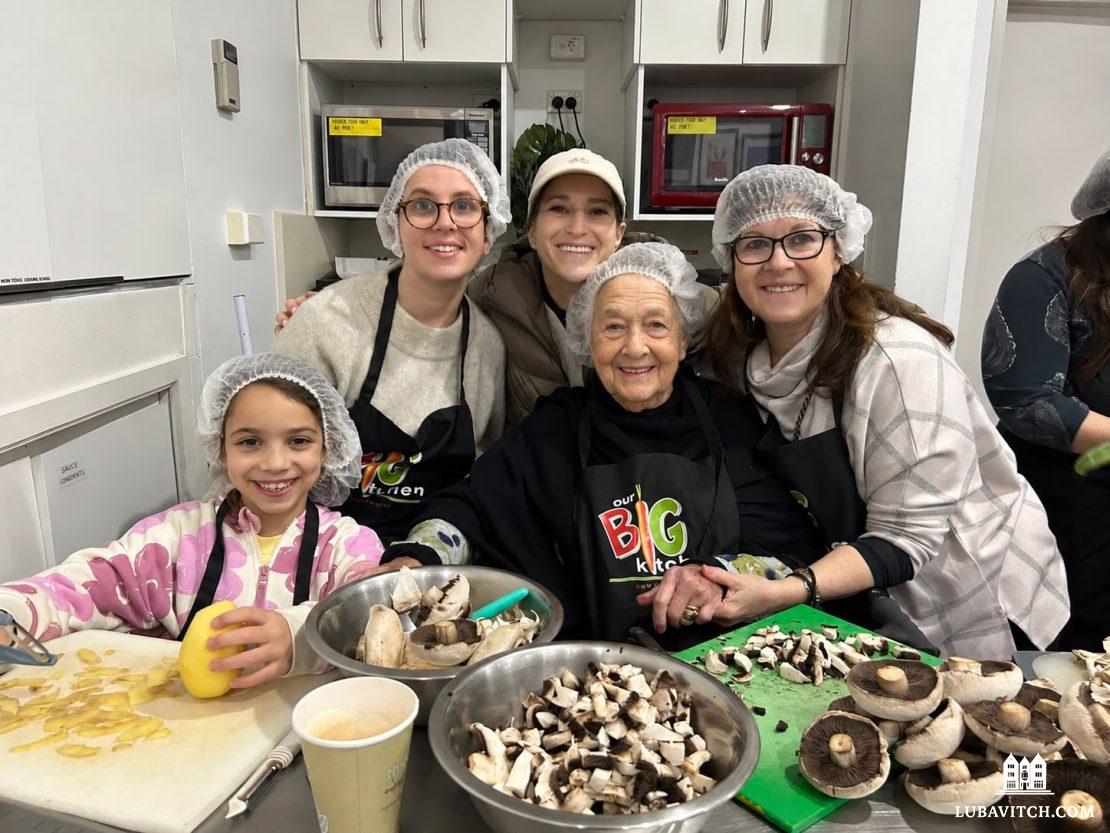
Following in the ancient Jewish tradition of feeding others, Rabbi Slavin and his wife Laya co-direct Our Big Kitchen’s massive enterprise. The kosher commercial kitchen cooks up 1,500 meals a day, roughly 300,000 meals annually, prepared by volunteers with a professional chef at the helm. And like their recipients, volunteers represent all parts of the community.
Some join through the criminal justice system, whether youth at risk, inmates post-release, or those sentenced to community service. Bar and Bat Mitzvahs, bachelorette parties, and corporate events are celebrated around bubbling pots and pans. The Kitchen has even opened its doors to U.S. naval soldiers and cruise ship passengers docked in Sydney’s port and seeking a meaningful experience.
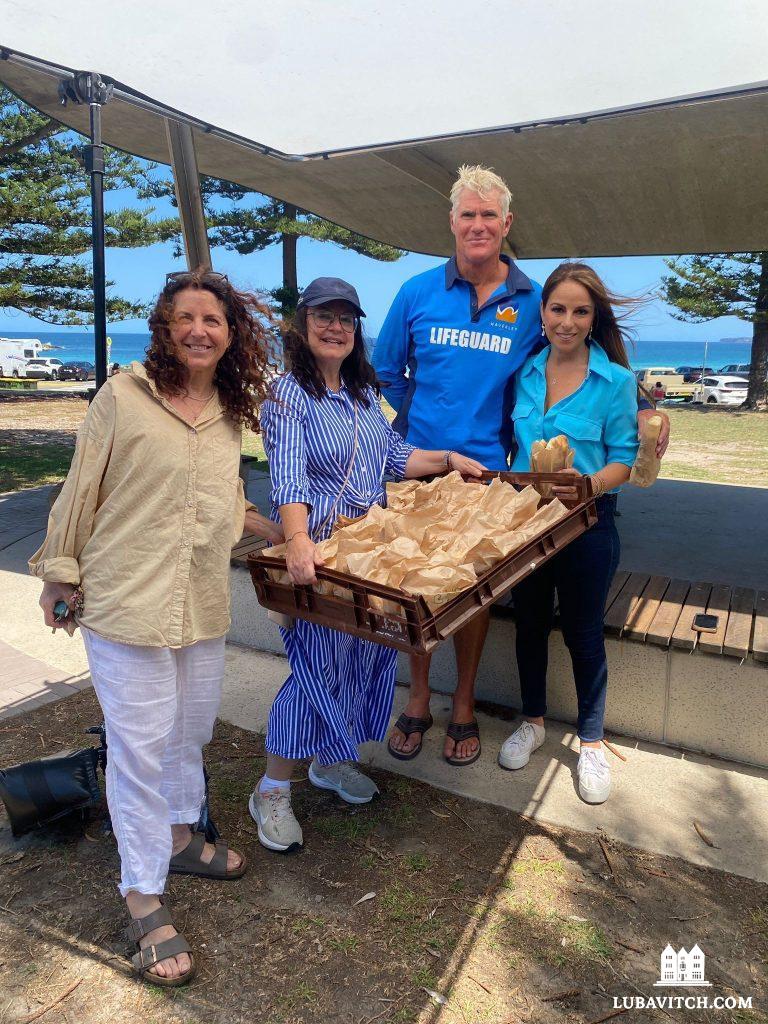
In 2023, Amy Wilson was chatting with a neighbor about a mutual acquaintance, a single mom with a cancer diagnosis. “I contacted Laya Slavin and asked if we could get food from her kitchen,” recalls Wilson. “She told me, ‘you get the drivers, we’ll send the food.’” At that moment, Angel Delivery Circuit was born. Wilson has never looked back. The interior designer turned non-profit director coordinates hundreds of volunteers who pick up meals from Our Big Kitchen for delivery across Sydney. “Everything is done very respectfully,” says Wilson. “A lot of families you would never believe are really struggling.”
Angel Delivery Circuit’s biggest day of service was after the Bondi terrorist attack last Chanukah. “The strength of the Jewish people was evident in those first few days,” recalls Wilson. “People gave with all their heart.”
It was during Covid that Rabbi Chezky Rosenfeld felt the hunger in Pittsburgh where roughly a quarter of the population experiences food insecurity. While food pantries provide staples, Rosenfeld believes many recipients don’t have the means to transform those ingredients into cooked meals. With inspiration from the Slavins, Rosenfeld opened Our Giving Kitchen in 2022. Today, the Kitchen partners with social service organizations, both Jewish and not, to deliver meals across the city. Beneficiaries are also invited to pick up meals from Our Giving Kitchen’s storefront. “We’ve removed the barrier for access,” explains Rosenfeld. “Whoever says they need, we give. No questions asked.”
This year, some 2,500 volunteers donned aprons in the city’s Chabad-run Our Giving Kitchen, producing over 35,000 meals. The recipe has gone viral: Rosenfeld now oversees ten “franchise” locations with similar prototypes operating throughout the world.
Chabad representatives recognize that their kitchens are an “entry point for those not yet comfortable at the synagogue,” says Rosenfeld. “This is where they feel at home.” Slavin agrees. “The output is what we cook,” he says. “The throughput is what happens while we are cooking: the community built, the growing involvement in Jewish life.” In all of these kitchens, sessions are often accompanied by discussions of Jewish philosophy or celebrations of upcoming holidays.
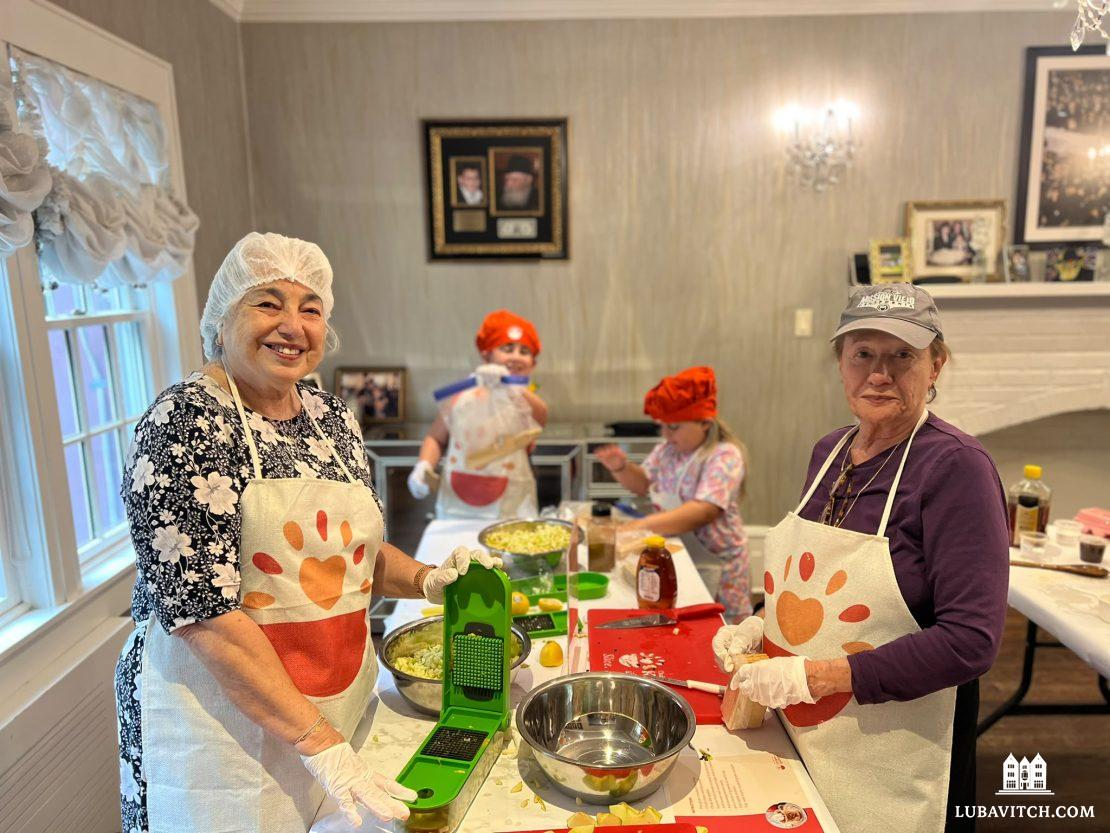
David Korman and his wife Amy chef up each Wednesday with two dozen other volunteers. Korman says that every race and religion are represented around the kitchen’s eight stainless steel tables. The assembly line is precise, the hygiene fastidious, and to the backdrop of a lively Spotify playlist of Chassidic tunes, over 200 meals are prepped and packed each session.
“Working in the kitchen counterbalances my other work, which tends to be cerebral and combative,” says the retired attorney and professor. “It’s nice to battle a carrot and a zucchini instead. Plus, the rabbi is very good with the knife. He’s taught me some real skills.”
“I love telling recipients that their meals come from a kitchen managed by a rabbi and his wife,” reflects Wilson back in Sydney. “It gives awareness that Jewish people are giving and not judgmental. Our food comes from a truly good place.”
 Related Articles
Be the first to write a comment.