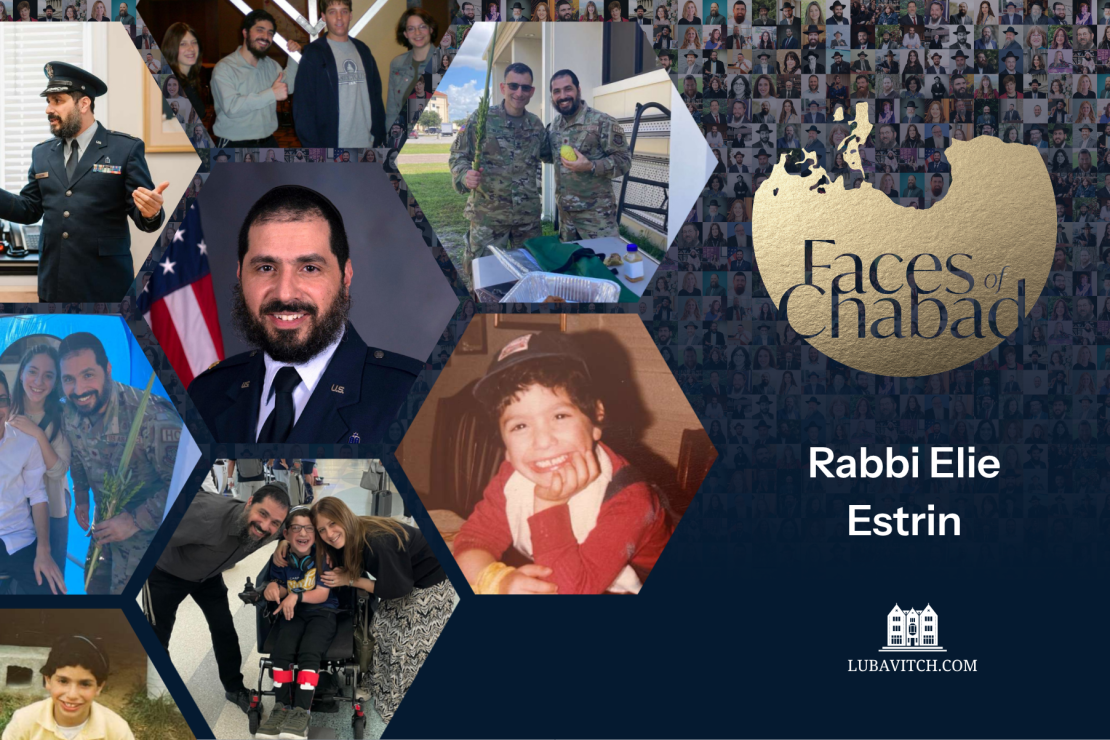


“I remember seeing on the news that the army would allow bearded chaplains. I figured—let me go to a recruiter. I thought that being a chaplain could help my work at Chabad of the University of Washington twofold: many of the students were either coming from or going into the military. Also, by that point we had already been operating on campus for ten years. I figured that if I can maintain some kind of official position, it would help the relationship Chabad had with the administration.
I was in officer training school while my wife was pregnant with our next son. We expected that things would progress as normal. Then, we went to the doctors and they told us they could see something was seriously wrong—the baby had major heart defects. For the next nine weeks the doctors were asking us, ‘Have you prepared for the baby’s funeral?’ ‘Have you decided how you want his last moments to look?’ Miraculously, our son Nissi was born—and he survived. We started posting daily “Nissi Updates” online and people became very invested in the story. It helped us, because knowing that people care is crucial. Writing a book about our story was a continuation of that. There was a kind of internal promise: if we are given this child, we will tell the story and hopefully inspire others. And just recently, at a convention, someone came over to me and told me that when she was going through something similar, she remembered what we said: that every moment of a child’s life has a Divine purpose—you don’t measure it by length of life but by the value of each moment.
We realized we couldn’t just throw ourselves back into our work on campus. We relocated to Miami, and I began to work in the Aleph Institute—continuing my chaplaincy. There are Jewish soldiers scattered everywhere, and they often feel like they are the only Jew where they are—and sometimes they actually are. In the end, it’s really just about trying to stay grounded in that responsibility—whether it’s one student on campus or one Jewish soldier on the other side of the world—you just try to show up and do what needs to be done.”
– Rabbi Elie Estrin, Miami, Florida
 Related Articles
Be the first to write a comment.